Emergency
HVAC After a Hurricane: Storm & Surge Recovery Steps
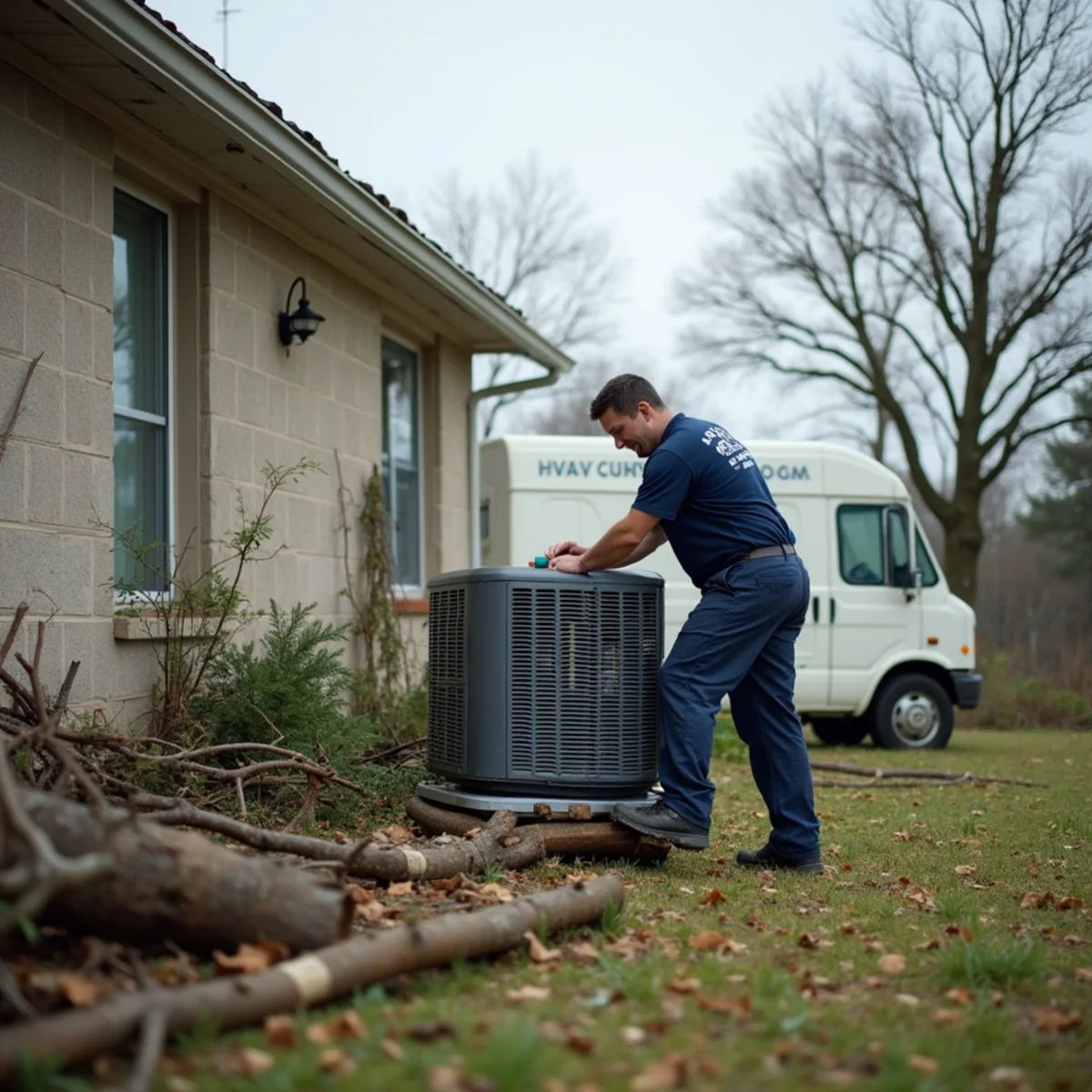
Every hurricane season, Gulf Coast homeowners face the same aftermath: a yard full of debris, a system that has sat in flood water or lost power for days, and a house that is heating up fast. Getting cooling back matters, but doing it in the wrong order can turn a repairable system into a total loss or put you at risk of electrical shock.
Melvin has walked customers through storm recovery in Denham Springs, Slidell, and across the region since 2020. The steps below reflect what actually protects your equipment and your family after the wind stops.
Do not energize a flooded system
If flood water reached the outdoor condenser, the indoor air handler, or the electrical disconnect, keep the system off at the breaker. Water in the compressor windings, the blower motor, or the control board can short the moment power returns. Silt and brackish surge water are especially corrosive to copper and aluminum coils and to electrical contacts.
Electrical hazard
Never wade into standing water to reach a breaker or disconnect. If the panel is wet or you are unsure whether a circuit is live, wait for a professional or the utility. No amount of comfort is worth an electrical shock.
Document everything before cleanup
Insurance claims live and die on documentation. Before you clear a single branch, photograph the water line on the equipment, the debris resting on the condenser, any bent fins or displaced units, and the model and serial plates. A storm HVAC repair specialist can help you record the measured damage in a way adjusters accept.
- Wide shots showing the unit in context and the flood line on the wall
- Close-ups of the data plate, coils, and electrical connections
- The date and time, ideally with a phone that timestamps photos
- Any prior maintenance records that show the system worked before the storm
What surge and wind actually do to HVAC
Wind lifts and shifts outdoor condensers, snapping the refrigerant line set and letting the charge escape. Flying debris flattens the condenser fins that the unit relies on to shed heat. Power surges when the grid comes back online fry capacitors, contactors, and control boards. And any submersion introduces corrosion that keeps working against the metal long after the water recedes.
The recovery inspection, step by step
A proper post-storm inspection is more than flipping the breaker and seeing if it runs. When Geaux 72 arrives, expect a methodical check that confirms the system is safe before it is asked to cool.
- Verify the disconnect and wiring are dry and undamaged.
- Inspect the compressor, blower, and control board for water intrusion.
- Check refrigerant charge and test the line set for storm-related leaks.
- Straighten or assess condenser fins and clear debris from the coil.
- Test capacitors and contactors that a surge may have weakened.
- Confirm the condensate drain is clear so humidity control returns.
Repair, replace, or restore?
A unit that only lost its capacitor to a surge is a quick fix. A condenser that sat in surge water for two days often is not worth restoring, because the corrosion will cause repeated failures. We give you an honest read on where your system falls, and we help you weigh that against your insurance coverage rather than pushing a replacement you may not need.
How surge water keeps corroding long after it dries
The damage from a storm surge does not stop when the water recedes. Coastal and river surge water is brackish and full of silt, and the salts it leaves behind draw moisture out of the humid Capital Region air for weeks, keeping electrical contacts and coil metal damp at a microscopic level. That sustained moisture drives galvanic corrosion, where the dissimilar copper and aluminum in a coil act like a tiny battery and eat themselves. A contactor or circuit board that looks dry on the surface can be quietly corroding at its solder joints and terminals, which is why a unit that runs for a week after a flood can still fail suddenly.
This is also why a proper inspection includes an insulation resistance test on the compressor windings before the system is ever asked to start. A megohmmeter reads whether moisture has crept into the motor windings, and a low reading means energizing the compressor would short it. Melvin has seen homeowners in Denham Springs and Slidell lose a compressor that survived the flood only because it was switched on before it was tested. Patience and a meter are cheaper than a compressor.
Ohm it out before you energize
Never treat a post-flood restart as a simple breaker flip. A technician should verify winding insulation and dry, clean contacts first. One premature start can convert a repairable system into a full replacement.
A safe re-energizing sequence after the power returns
When the grid finally comes back on after a Louisiana storm, the order of operations protects both you and the equipment. Rushing it is how a small surge repair becomes a large one.
- Leave the HVAC breakers off until the unit has been inspected and confirmed dry
- Have the disconnect, wiring, and control board checked for water intrusion and corrosion
- Test compressor winding insulation with a megohmmeter before any start attempt
- Replace surge-weakened capacitors and contactors rather than reusing them
- Confirm the refrigerant charge and pressure-test the line set for storm-related leaks
- Only then energize the system and watch the first cycle for normal amp draw and pressures
One detail homeowners overlook after a storm is the line-set insulation and the outdoor disconnect box, both of which trap water and hide damage. The black foam sleeve over the copper suction line soaks up flood water like a sponge and holds it against the pipe, feeding corrosion long after the yard has dried, so a thorough inspection often means replacing that insulation outright. The disconnect box mounted low on the wall near the condenser collects silt and moisture in its contacts and fuse clips, where a hidden short can sit waiting for the next humid morning. Melvin also checks the pad the condenser sits on, since surge water can undermine it and leave the unit tilted, which stresses the refrigerant lines and hurts oil return to the compressor. In Denham Springs and Slidell, these small storm-recovery details are what separate a system that runs reliably through the recovery weeks from one that fails again in the middle of the cleanup.
What flood exposure usually means, component by component
Homeowners want a straight answer on what survives a flood and what does not, so here is the honest pattern we see across Denham Springs and Slidell. The deciding factors are how deep the water rose, how long it sat, and whether it was relatively clean rainwater or brackish, silty surge. Clean, shallow, brief exposure gives a component a fighting chance; deep, prolonged, salty surge water usually does not.
| Component | Light, brief exposure | Deep or prolonged surge |
|---|---|---|
| Outdoor condenser | Often salvageable after cleaning and testing | Usually replace; corrosion keeps returning |
| Compressor windings | Test insulation before any start attempt | Replace if a megohmmeter reads low |
| Blower motor and control board | Sometimes recoverable if kept dry | Replace; silt and salt keep corroding |
| Ductwork with interior insulation | Replace insulated or flex duct runs | Replace; it holds contamination |
| Capacitors and contactors | Replace as cheap insurance | Replace; surge and water weaken them |
The value of this map is that it keeps the conversation honest in both directions. We will not condemn a whole system when only the capacitor and contactor took a hit, and we will not restore a compressor that sat two days in surge water just to watch it fail again mid-recovery. For budgeting only, and never as a firm quote until we inspect, a straightforward storm-related repair in this market tends to fall in the 150 to 650 dollar range, while a full replacement forced by deep surge water can run roughly 3,649 to 11,677 dollars depending on size and efficiency. Where your loss lands on that spread is exactly what a proper inspection and your insurance coverage decide together.
What recovery actually looks like on a timeline
Homeowners in Denham Springs and Slidell often ask how long a proper storm recovery takes, and the honest answer is that it depends far more on parts and inspection availability than on the labor itself. A capacitor-and-contactor surge repair can be a same-visit job once a tech confirms the system is dry. A restoration that needs a new control board, a fin comb on a bent coil, and a leak check on the line set is usually a return visit while the part comes in. A full replacement forced by deep surge water is the longest path, because it may wait on the insurance adjuster, the equipment order, and a permit inspection.
The mistake that lengthens every one of those timelines is skipping the initial dry-out and insulation test in a rush to get cold air back. A compressor started wet fails within days, which resets the clock and often converts a repair into a replacement. Patience in the first forty-eight hours is what keeps the recovery short overall, even when it feels slow in the moment.
Get inspected before you rely on the system
Running a storm-damaged system without an inspection risks turning a small problem into a compressor replacement. If your home in Denham Springs, Slidell, or anywhere in the Capital Region rode out a storm, call Geaux 72 at (831) 461-3437 for a storm HVAC assessment before you count on that AC through the recovery weeks ahead.
Frequently Asked Questions
Not until it has been inspected. Flood water in the compressor, blower, or electrical components can short the system when power returns. Keep it off at the breaker and have a technician verify it is dry and safe.
Coverage varies by policy and whether damage came from wind or flood. Thorough documentation of the water line, debris, and data plates greatly improves your claim. We can help record the damage properly.
Sometimes, but submersion in silty surge water often causes ongoing corrosion and repeated failures. We inspect and give you an honest repair-versus-replace recommendation rather than a blanket answer.
Before you rely on the system. Running storm-damaged equipment can turn a minor surge fix into a compressor loss. Call (831) 461-3437 to schedule an assessment during recovery.
Do not restart it until a technician confirms the disconnect, wiring, and controls are dry and the compressor windings pass an insulation test. One premature start can turn a repairable system into a replacement. Call (831) 461-3437 for a post-storm assessment.
Related services & areas
Services
Service areas