Commercial
Commercial AC Maintenance for Baton Rouge Businesses
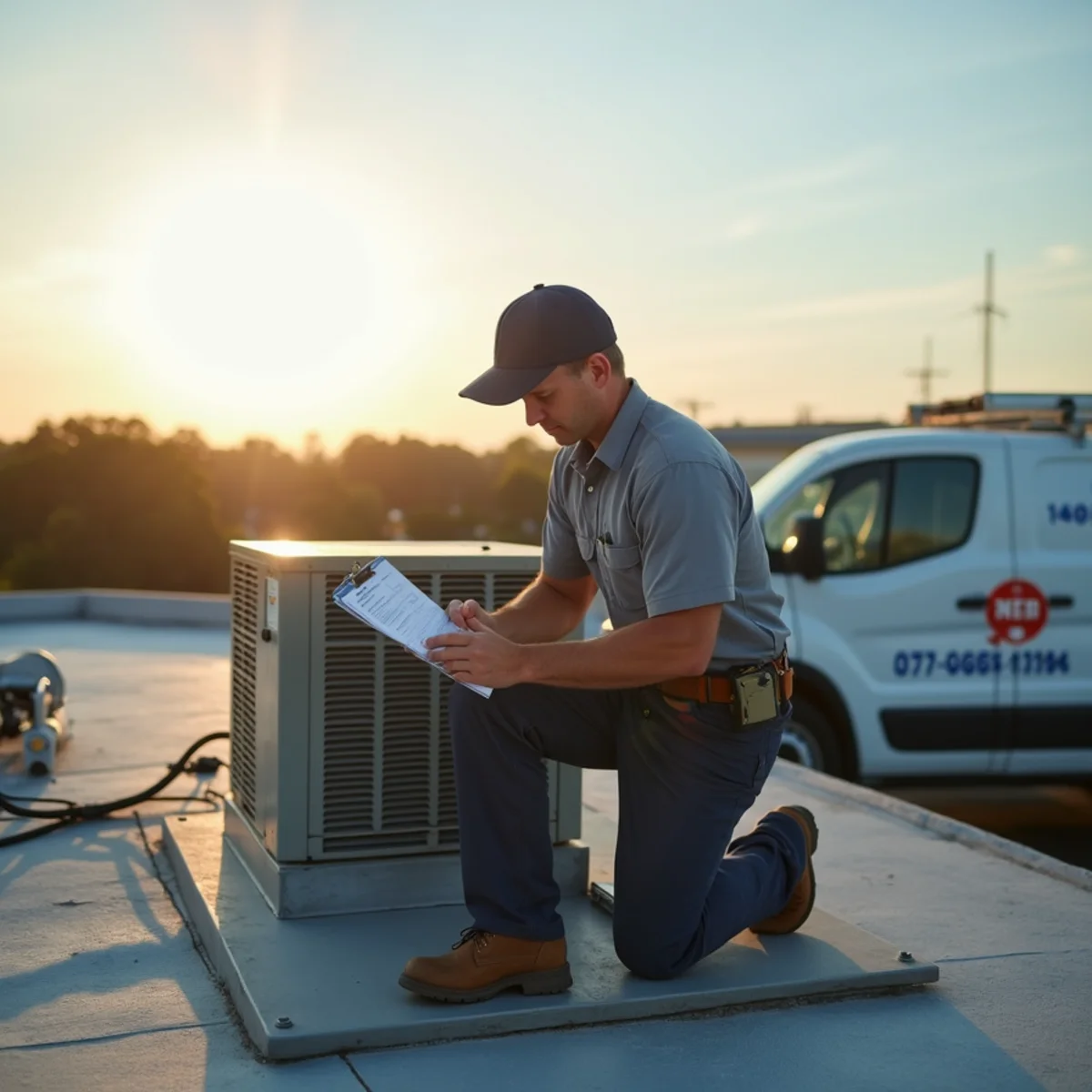
When the AC fails at a home, it is miserable. When it fails at a business, it costs money by the hour. Customers walk out of a hot store, employees lose productivity, restaurant coolers strain, and in some cases inventory is at risk. For Baton Rouge businesses, where the cooling season is long and demanding, a reactive approach to commercial HVAC is a gamble that eventually costs far more than prevention would have.
Melvin works with business owners across Baton Rouge, Gonzales, and Prairieville to keep their systems running through our toughest months, and proactive maintenance is the foundation of that.
Why commercial systems demand more
Commercial HVAC equipment, from rooftop package units to split systems serving large spaces, runs harder and longer than residential gear, often with tight tolerances and higher stakes. A rooftop unit baking in the Louisiana sun and running most of the day accumulates wear fast. Multiply that across several units on a building, and small neglected issues compound into major failures at the worst possible time.
What proactive maintenance prevents
The whole point of a maintenance program is to turn surprise breakdowns into scheduled, minor service. Businesses that maintain their systems see the payoff in several ways.
- Fewer emergency failures during peak business hours
- Lower energy bills from clean coils and correct refrigerant charge
- Longer equipment life, deferring expensive replacements
- Consistent comfort that keeps customers and staff happy
- Documentation that supports warranty coverage and budgeting
The cost of downtime
For most businesses, the cost of an emergency HVAC failure during a busy afternoon, lost sales, sent-home staff, and premium emergency rates, dwarfs the annual cost of a maintenance plan. Prevention is the cheaper line item.
What a commercial maintenance visit covers
A commercial tune-up is more involved than a residential one, scaled to the equipment and the stakes.
- Inspect and clean condenser and evaporator coils on each unit
- Check and adjust refrigerant charge and test for leaks
- Measure static pressure and airflow, and change or clean filters
- Test electrical components, capacitors, contactors, and motor amp draws
- Inspect belts, bearings, and economizer operation on package units
- Clear condensate drains and check for proper drainage
- Verify thermostat and control operation across zones
Scheduling around your business
Good commercial maintenance works around your operations, not against them. That means scheduling visits before and after the peak cooling season, and handling service during off-hours when possible so your customers never see it. A planned maintenance calendar also lets you budget HVAC as a predictable expense instead of an unpredictable emergency.
Local, responsive, and accountable
For a business, the value of a local contractor is responsiveness and accountability. When you need service fast, a locally owned company that knows your building and your equipment beats an out-of-town call center. Melvin has served Capital Region businesses since 2020, building the kind of relationship where one call gets a familiar tech who already knows your system.
Economizers, building pressure, and the details that drive commercial bills
Commercial systems have moving parts that residential ones do not, and they are where the savings and the surprises hide. Most rooftop package units carry an economizer, a set of dampers that pulls in cool outside air for free cooling when conditions allow. When the economizer's linkage or actuator sticks, which is common on units baking on a Baton Rouge roof, it either wastes free cooling or drags in hot, humid air and forces the compressors to fight it. Checking economizer operation is one of the highest-return items on a commercial visit, and it is exactly the kind of thing a reactive service call never catches.
Building pressure is the other commercial-specific lever. Businesses that exhaust a lot of air, restaurants and salons especially, can go negative and pull humid outside air through every door and gap unless makeup air is balanced against the exhaust. That imbalance shows up as sticky entryways, doors that are hard to open, and runaway humidity. Larger commercial systems also carry enough refrigerant that federal EPA Section 608 rules require leaks above a certain threshold to be logged and repaired on a schedule, so leak tracking is part of responsible commercial upkeep, not an optional extra.
The stuck-economizer tax
A stuck-open economizer can quietly pour hot, humid Louisiana air into your space all summer, spiking bills with no obvious failure. It is invisible until someone checks the dampers, which is one more reason scheduled maintenance beats waiting for a breakdown.
Building a maintenance plan that fits your operation
A good commercial plan is shaped around your building and your calendar, not sold as a one-size box. The right plan for a Gonzales retail store looks different from a Prairieville restaurant.
- Visit frequency matched to run hours: twice a year minimum, more for heavy-use rooftop units
- Economizer and damper checks so free cooling works and hot air stays out
- Building pressure and makeup-air balance for exhaust-heavy spaces
- Filter and belt changes on a schedule so airflow and motors stay healthy
- Refrigerant leak tracking and logging where the system's charge requires it
- A planned-replacement budget so aging units are swapped on your timeline, not at failure
For a business, the accounting case for a maintenance plan is often clearer than for a home, because the costs of failure are measurable. An afternoon without cooling in a Baton Rouge retail store or restaurant means lost sales, comped meals or refunds, staff sent home, and the premium rate of an emergency after-hours call, and those figures dwarf the predictable annual cost of scheduled service. A maintenance agreement also turns HVAC from an unpredictable emergency into a budgeted line item, which is exactly what a business owner wants when planning cash flow. Just as important, a documented maintenance history supports equipment warranties and gives you a clear-eyed timeline for planned replacement, so you can swap an aging rooftop unit on a slow week of your choosing rather than during a Saturday-night rush in August. For business owners in Gonzales and Prairieville, the value is not only fewer breakdowns; it is the ability to run the operation without the constant background risk that a neglected system will pick the worst possible moment to quit. Prevention is simply the cheaper and calmer way to run.
A commercial maintenance schedule at a glance
A commercial plan works best when everyone can see what happens when, so nothing falls through the cracks between the busy seasons. The frequency scales with run hours, which is why a heavy-use rooftop unit over a Gonzales kitchen needs more attention than a lightly loaded office split. The table below frames a baseline rhythm a Prairieville or Gonzales operator can build a plan around.
| Item | Frequency | Why it pays |
|---|---|---|
| Filter changes | Monthly to quarterly | Protects airflow and motors |
| Coil cleaning | Twice a year minimum | Cuts bills, restores capacity |
| Economizer and damper check | Twice a year | Recovers free cooling, blocks hot air |
| Refrigerant and leak check | Twice a year, log as required | Prevents capacity loss and fines |
| Belts, bearings, motor amps | Twice a year | Heads off mid-shift breakdowns |
| Building pressure and makeup air | Yearly, or when exhaust changes | Stops humid-air infiltration |
The economizer row deserves special attention, because a stuck-open damper can pour hot, humid Louisiana air into the space all summer and spike bills with no obvious failure to trigger a service call. That kind of invisible waste is exactly what scheduled maintenance catches and a reactive break-fix approach never does, which is why the schedule itself is the savings.
The accounting case a business owner can take to the bank
For a business, the case for a maintenance plan is often clearer than for a home, because the costs of failure are measurable. An afternoon without cooling in a Baton Rouge retail store or restaurant means lost sales, comped meals or refunds, staff sent home, and the premium rate of an emergency after-hours call, and those figures dwarf the predictable annual cost of scheduled service. A maintenance agreement turns HVAC from an unpredictable emergency into a budgeted line item, which is exactly what an owner wants when planning cash flow for the year.
The documentation is worth money too. A maintenance history supports equipment warranties and gives you a clear-eyed timeline for planned replacement, so you can swap an aging rooftop unit on a slow week of your choosing rather than during a Saturday-night rush in August. For owners in Gonzales and Prairieville, the value is not only fewer breakdowns; it is the ability to run the operation without the constant background risk that a neglected system will pick the worst possible moment to quit. Prevention is simply the cheaper and calmer way to run a building.
Budget it, do not gamble on it
A planned replacement scheduled on your own timeline almost always costs less and disrupts less than an emergency swap during peak season. A maintenance history is what lets you see the failure coming and plan around it.
Protect your business from downtime
Do not wait for a rooftop unit to quit on your busiest day. For commercial HVAC maintenance plans and service in Baton Rouge, Gonzales, and Prairieville, call Geaux 72 at (831) 461-3437 and keep your business comfortable and open.
Frequently Asked Questions
At least twice a year, ideally before and after the peak cooling season, and more often for heavy-use equipment like restaurant or retail rooftop units. Commercial systems run harder than residential and benefit from frequent service.
For most businesses, yes. The cost of an emergency failure during business hours, in lost sales, sent-home staff, and premium rates, far exceeds the annual plan cost. Maintenance turns surprises into scheduled minor service.
Yes. We schedule commercial service around your operations, including off-hours when possible, so your customers and staff are not disrupted. A planned calendar also makes HVAC a predictable budget item.
Coil cleaning, refrigerant and leak checks, airflow and static pressure measurement, electrical and motor testing, belt and economizer inspection, drain clearing, and control verification across zones. Call (831) 461-3437.
The economizer's dampers pull in cool outside air for free cooling when conditions allow, but on units baking on a Baton Rouge roof the linkage or actuator often sticks. A stuck-open damper drags in hot, humid air and spikes bills invisibly. Checking it is one of the highest-return items on a visit. Call (831) 461-3437.
Related services & areas
Service areas