Problem-solving
Common Fridge & Range Problems (and Quick Fixes)
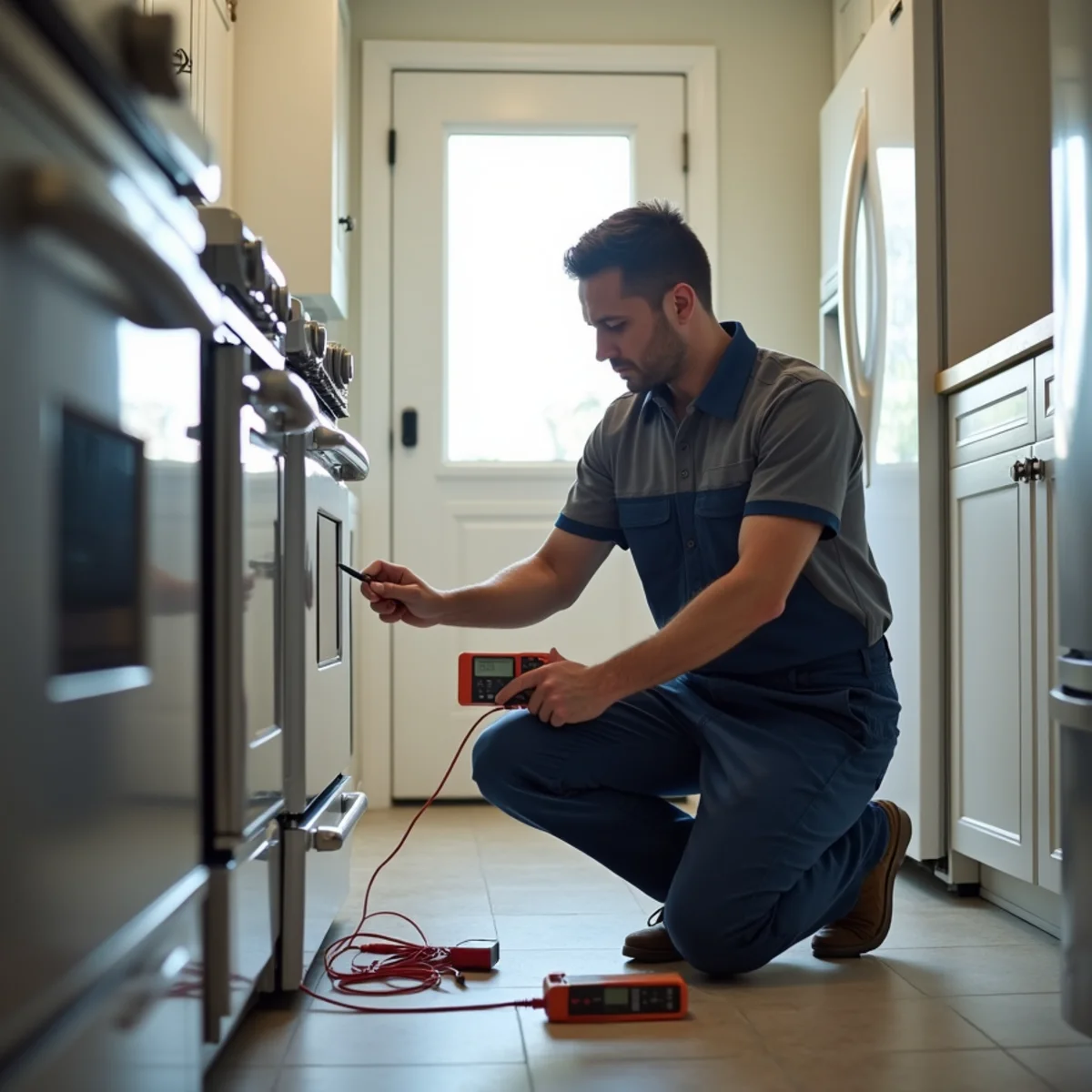
The kitchen is the one room where an appliance failure disrupts daily life immediately. A fridge that quits, a range burner that will not light, an oven that runs cold, all of them send you scrambling. The good news is that a fair number of these problems have simple causes you can check yourself before deciding whether to call for appliance repair.
Melvin services fridges, ranges, and other kitchen appliances across Baker and Central alongside the HVAC work, and these are the issues that come up week after week.
Refrigerator running warm
Before assuming the worst, check the basics. A fridge that is warm often has a simple cause that costs nothing to fix.
- Dusty condenser coils that cannot shed heat; unplug and vacuum them
- A temperature dial bumped to a warmer setting
- Overpacked shelves blocking the interior air vents
- A door gasket that no longer seals, letting warm air leak in
Refrigerator too noisy or leaking water
A loud hum or rattle can be as simple as the unit not sitting level, or coils and a condenser fan that need cleaning. Water pooling under or inside the fridge usually means a clogged defrost drain, which can sometimes be flushed clear, or a frozen water line to the ice maker. Persistent leaks or grinding noises, though, point to a failing component that needs a tech.
Always unplug first
Before you clean coils, check a fan, or reach behind any appliance, unplug it. For gas ranges, if you ever smell gas, do not flip switches or light anything. Leave and call your gas utility from outside.
Gas range burner will not light
A single burner that clicks but will not ignite is often just a clogged or wet burner cap. Make sure the cap and the igniter are dry and seated correctly, and clean out any food debris around the igniter with a soft brush. If none of the burners light and you smell gas, stop and call the utility. If the igniter clicks on every burner but none catch, the issue may be the gas supply or the igniter module.
Electric range element not heating
On a coil-element range, a dead burner can sometimes be diagnosed by swapping it with a working element of the same size to see if the problem follows the element or stays with the socket. If it follows the element, the element is bad. If it stays with the socket, the receptacle or switch needs service.
Oven runs hot or cold
An oven that bakes unevenly or misses the set temperature often has a failed temperature sensor or a bake element that no longer heats fully. On an electric oven, a bake element that does not glow evenly, or shows a visible break, is a common and repairable failure. A wildly inaccurate oven is worth diagnosing rather than fighting with recipes.
Reading the clues your appliance is giving you
Appliances tell you where the problem is if you know how to listen. On a refrigerator, the split between the two compartments is the biggest clue. A freezer that stays cold while the fresh-food side warms up almost always points to an airflow problem: a failed evaporator fan, a frost-blocked evaporator from a defrost fault, or a stuck air damper between the sections. When both compartments are warm and the unit is silent, suspicion shifts to the compressor, its start relay, or a sealed-system issue, which is a technician's job. That single observation saves a lot of guessing in Baker and Central kitchens.
Ranges have their own logic. On a gas oven that will not heat, the culprit is often the igniter rather than the gas valve, because the oven safety valve only opens once the glowing igniter draws enough current through it. A weak igniter that glows but never gets hot enough will leave the oven cold with the gas valve safely shut. On an electric oven, a bake element that does not glow evenly or shows a visible break has failed, while an oven that misses its setpoint across the board more often has a bad temperature sensor. Knowing which part to suspect keeps you from replacing the wrong one.
The gas oven safety valve
If your gas oven will not heat but the burners on top light fine, do not assume the gas supply is the problem. The oven igniter is the usual failure, and it is a repair best left to a technician who can confirm it with an amp reading.
A symptom-to-cause quick reference
When something acts up, this shorthand points you toward the likely cause before you decide whether to call for appliance repair.
- Freezer cold, fridge warm: evaporator fan, defrost system, or a stuck damper
- Both compartments warm and silent: compressor, start relay, or sealed system
- Water pooling inside the fridge: a clogged defrost drain that may flush clear
- Gas oven will not heat, burners fine: a weak or failed oven igniter
- Electric oven bakes unevenly: a broken bake element or a bad temperature sensor
- Gas cooktop burner clicks but will not light: a wet or misaligned burner cap
A word on where the money goes is useful when you are deciding whether to fix or replace a kitchen appliance. On refrigerators, the cheap and common repairs are the door gasket, the start relay, and the evaporator or condenser fan, any of which is usually worth doing on a unit under about ten years old. The expensive repair is the sealed-system compressor, which on an older fridge often costs enough that a replacement makes more sense. On ranges, igniters, elements, and sensors are affordable and routine, so a range is frequently worth repairing well past a decade. In Baker and Central homes, our heat and humidity age the electronic control boards faster than the mechanical parts, so a board failure on an older appliance is another point where replacement can win. Knowing these rough tiers before a technician arrives helps you make a calm decision instead of a panicked one, and it lets you ask the right question: not just what failed, but whether fixing it is the smart money on this particular appliance.
Which kitchen repairs are usually worth making
When a fridge or range acts up, the money question follows quickly, and it helps to know which repairs are routine and which ones signal the end for an aging appliance. The tiers below reflect what we see across Baker and Central kitchens, where a hot utility room and mineral-heavy water push the electronics harder than the manuals assume.
| Appliance and failure | Repair outlook | Consider replacing when |
|---|---|---|
| Fridge door gasket or start relay | Cheap and routine | Almost never; fix it |
| Fridge sealed-system compressor | Expensive, certified work | Unit is past about ten years |
| Range igniter, element, or sensor | Affordable and routine | Rarely; ranges last well |
| Oven control board | Moderate to costly | Board cost nears a new range |
| Any appliance, repeated board failures | Diminishing returns | Heat has aged the electronics |
The through-line is that mechanical parts, gaskets, igniters, elements, fans, and relays, are usually worth fixing well past the halfway point of an appliance's life, while a failed sealed-system compressor or a pricey control board on an older unit is where replacement starts to win. Asking not just what failed but whether fixing it is the smart money on this particular appliance keeps the decision calm and clear.
Safety rules before you touch any appliance
Before any of the homeowner checks in this guide, a few safety rules keep a simple troubleshooting session from turning into an injury or a bigger repair. Electricity and gas are the two hazards that deserve real respect in a Baker or Central kitchen, and both are easy to manage with a little discipline.
- Unplug the appliance before touching coils, fans, or any internal part
- Never bypass or defeat a safety switch just to make something run
- If you smell gas, do not flip switches or light anything; leave and call the utility from outside
- Let a hot oven or element cool fully before inspecting it
- Pull heavy appliances out carefully so you do not damage the water line or floor
The judgment call is knowing where DIY ends. Cleaning coils, checking a gasket, reseating a burner cap, and swapping a like-for-like element are reasonable homeowner tasks. Sealed-system refrigeration, gas valves and connections, and control-board diagnostics are not, both because they require certification and tools and because a mistake there is dangerous or expensive. When a check does not solve the problem, or the moment gas, sparks, or an unclearable leak enter the picture, that is the line where calling a professional is the smart, safe move.
When to call a professional
Sealed-system refrigeration, gas connections, and control-board diagnostics are not DIY territory. If your quick checks do not solve it, or if you smell gas, see sparks, or find a leak you cannot clear, it is time for a technician. For appliance repair in Baker, Central, and around Baton Rouge, call Geaux 72 at (831) 461-3437 and we will get your kitchen working again.
Frequently Asked Questions
Common causes include dust-clogged condenser coils, a bumped temperature dial, overpacked shelves blocking vents, or a worn door gasket. Check those first; if it stays warm, the compressor or sealed system may need service.
Usually a wet or clogged burner cap, or debris around the igniter. Make sure the cap is dry and seated and clean the igniter gently. If you smell gas or nothing lights, stop and call your gas utility.
On an electric oven, a bake element that does not glow evenly across its length, or shows a visible break, has failed. An oven that misses its set temperature may instead have a faulty temperature sensor worth diagnosing.
Call a pro for sealed-system refrigeration, gas connections, control-board faults, or anything involving a gas smell, sparks, or a leak you cannot clear. Reach Geaux 72 at (831) 461-3437.
It depends on the appliance's age and the board's cost. On a newer unit a board swap can be worthwhile, but on an older refrigerator or range where our heat has aged the electronics, a board that costs a large share of a new appliance often tips toward replacement. Call (831) 461-3437 for an honest read.
Related services & areas
Service areas