Local
Hurricane-Season HVAC Prep for Baton Rouge Homes
Hurricane season runs from June through November, and every year Baton Rouge homeowners find out the hard way that a storm-damaged HVAC system is a miserable thing to deal with in the humid recovery weeks that follow. The systems that come through best belong to people who did a little preparation before the first named storm formed in the Gulf. A few hours of prep now can save a compressor and shave days off your recovery.
Melvin has helped homeowners in Gonzales and Denham Springs prepare and recover since 2020, and this is the checklist he recommends before the season ramps up.
Start with a pre-season tune-up
A system in good condition survives stress better and is easier to assess after a storm. A pre-season maintenance visit checks the refrigerant charge, tightens electrical connections, tests the capacitor and contactor, clears the condensate drain, and confirms the system is running at spec. It also gives you a documented baseline that helps enormously if you later need to file a storm-damage insurance claim.
Protect the outdoor unit
The condenser sitting outside is the most exposed part of your system. You cannot storm-proof it entirely, but you can reduce the risk of wind and debris damage.
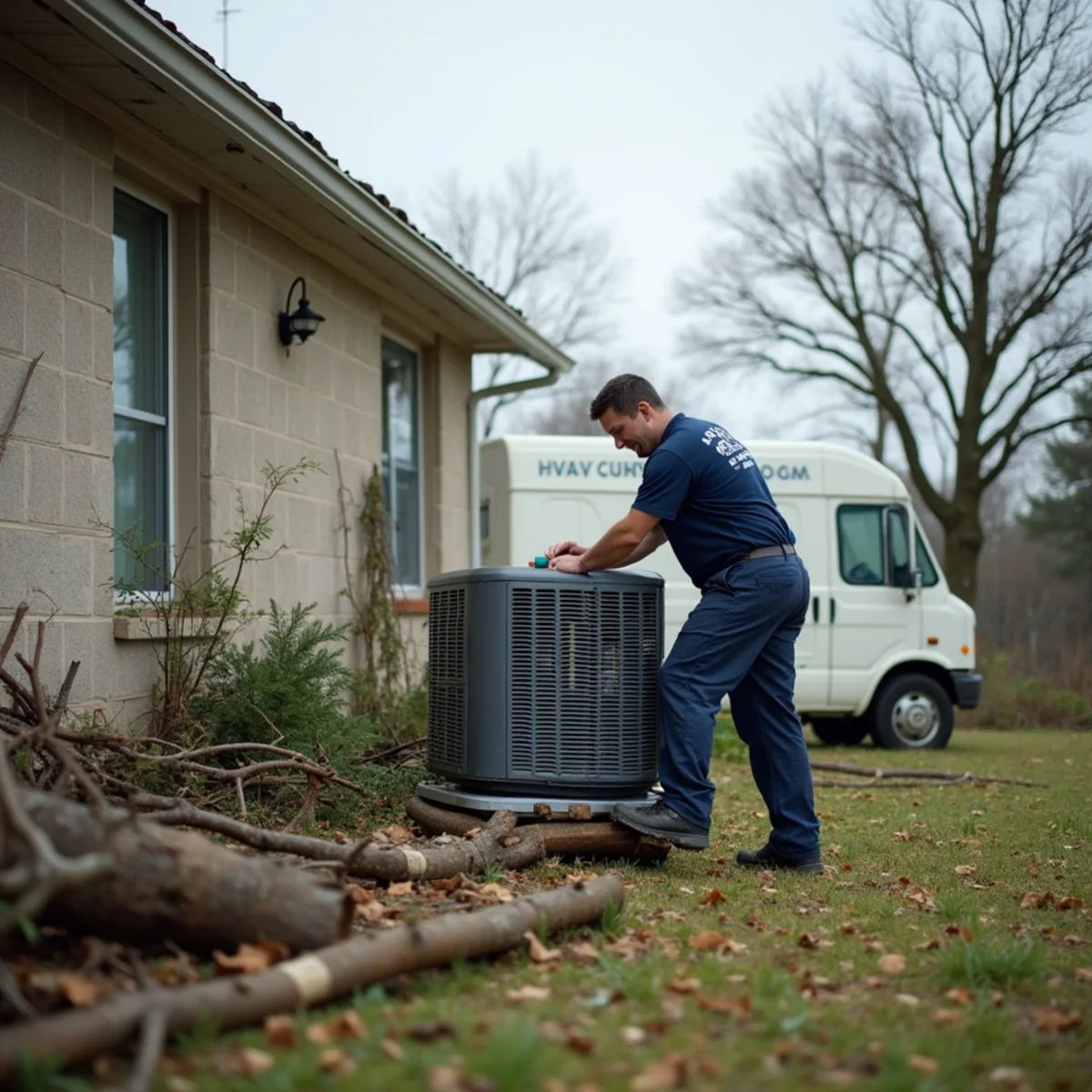
- Clear the area around the unit of anything that could become a projectile.
- Trim back branches that could fall on or against the condenser.
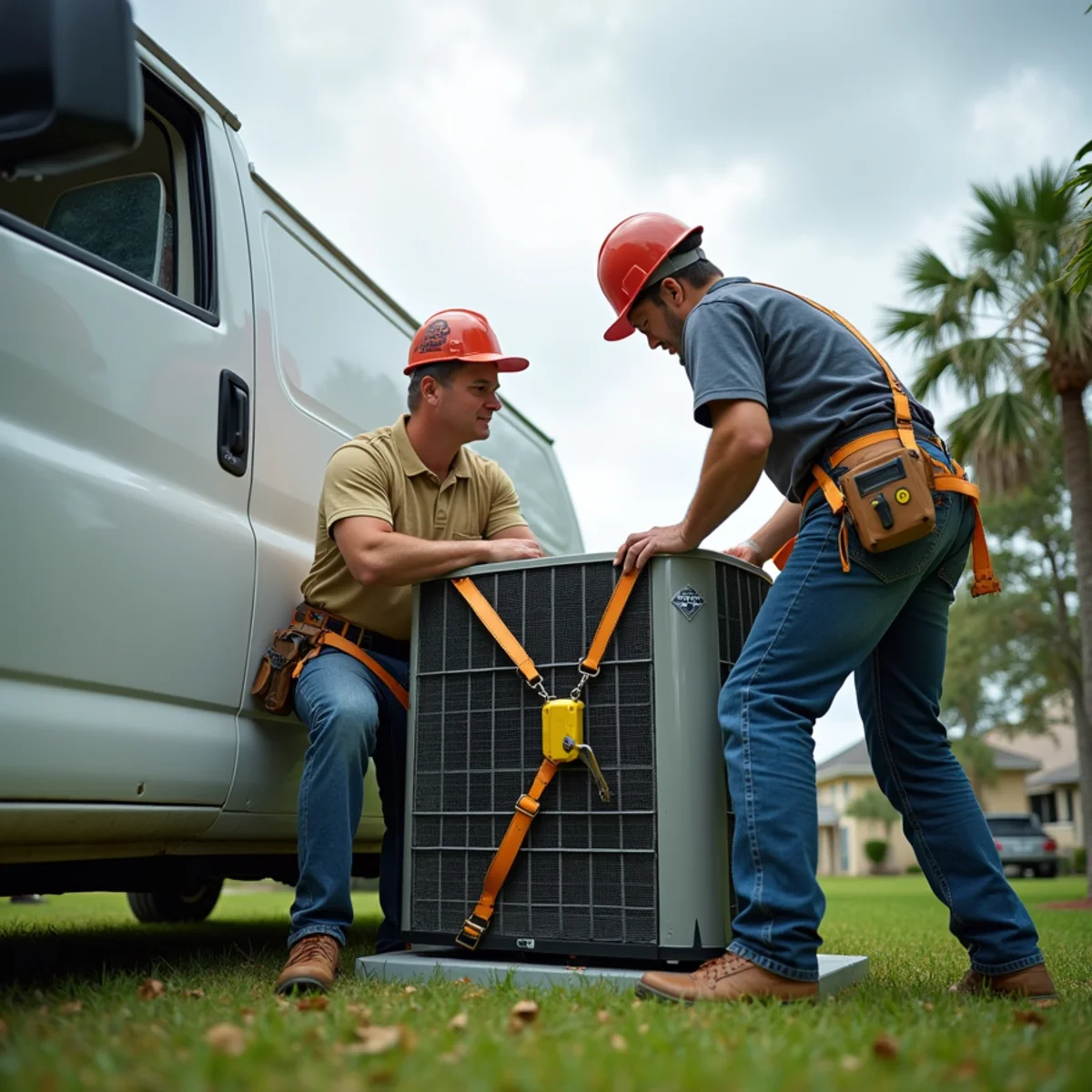
- Consider a manufacturer-approved cover or hurricane strap kit for high-wind events, but never cover a running unit.
- Know where the outdoor electrical disconnect is so you can cut power quickly.
Cut power before the surge
When a storm is imminent and you have time, turn the system off at the thermostat and the outdoor disconnect. This protects it from the power surges that hit when the grid fails and when it comes back online, which are a leading cause of post-storm HVAC failures.
Guard against surge damage
The grid coming back online after an outage sends surges that fry capacitors, contactors, and control boards. A whole-home surge protector installed at your panel, or a dedicated HVAC surge protector, is inexpensive insurance for equipment that costs thousands to replace. It is one of the best-value storm preparations you can make.
Plan for the flood risk
In flood-prone parts of the Capital Region, elevating the outdoor condenser on a stand or pad above the expected flood level can be the difference between a survivable system and a total loss. If your home has flooded before, talk to us about elevation options before the next season, not after the next storm.
Prepare your documentation now
Take clear photos of your HVAC system while it is intact and working, including the model and serial plates. Keep your maintenance records handy. If a storm damages the system, that pre-storm evidence proves it was in good condition and strengthens any insurance claim considerably.
The right surge protection for HVAC, and why it works in layers
Surge protection is not one device but a layered defense, and it matters enormously here because the surges that follow a Louisiana outage are a leading killer of HVAC control boards. A Type 1 surge protective device installs at the service entrance and knocks down the big transients coming off the utility, while a Type 2 device at the panel handles what gets through and protects branch circuits. Many homeowners add a dedicated surge protector right at the condenser as well, since the variable-speed boards and communicating controls in modern systems are exactly what a surge destroys. Layering them is inexpensive next to the cost of a fried control board or a new compressor.
Prep is also the moment to build in resilience for the outage itself. If you plan to run the AC on a generator when the grid fails, adding a soft-start device to the condenser before the season lets a smaller generator start the compressor and cuts electrical stress on the system. On the mounting side, the condenser should be secured against wind uplift with manufacturer-approved hurricane straps or a tie-down kit rated for high wind, which also helps satisfy code in exposed Gonzales and Denham Springs locations. None of this can be done well the day a cone points at Louisiana.
Check the joule rating and status light
A surge device wears out absorbing hits. Choose one with a healthy joule rating and a status indicator, and check that light after every major storm so you know it is still protecting you.
A two-week-out prep timeline
When a system is churning in the Gulf, a short, ordered checklist keeps you from scrambling. Work backward from landfall.
- Two weeks out: book a tune-up and confirm surge protection is installed and its status light is green
- One week out: trim branches and clear anything near the condenser that could become a projectile
- Several days out: photograph the system and data plates and gather maintenance records for insurance
- As the storm nears: locate the outdoor disconnect and confirm any hurricane straps are secure
- Before landfall: shut the system off at the thermostat and the disconnect ahead of the surge
- After it passes: leave the system off until it is inspected, then check the surge device status light
One more preparation pays off in the miserable stretch right after a storm, before crews and parts are easy to come by: keep a small kit and a plan for your specific system. Photograph the location of your outdoor disconnect and label your HVAC breakers now, so that in the chaos after landfall you or a neighbor can safely cut and restore power without guesswork. Keep the model and serial numbers, your maintenance records, and our number where you can reach them even if the power and internet are down. If your household includes someone who cannot tolerate days without cooling, decide in advance whether that means a generator with a soft-start or a plan to relocate, because the middle of an outage is the worst time to figure it out. In Gonzales and Denham Springs, the families who come through hurricane season best are not the lucky ones; they are the ones who did this unglamorous planning during a calm week in May instead of scrambling as the cone narrowed on the Gulf.
Weighing your storm-prep investments
Not every preparation costs the same or protects against the same threat, and a Gonzales or Denham Springs homeowner planning ahead benefits from seeing them side by side. Some are free and take an afternoon; others are equipment investments that pay off across many seasons. The table below sorts the common measures by what they guard against and roughly what they involve, so you can prioritize before a cone points at Louisiana.
| Preparation | Guards against | Relative investment |
|---|---|---|
| Clear debris, trim branches | Wind-borne projectile damage | Free, an afternoon |
| Pre-season tune-up | Stress failure, weak claims | Modest, yearly |
| Panel and HVAC surge protection | Grid-return surge to boards | Low, high payoff |
| Hurricane straps or tie-down kit | Wind uplift of the condenser | Low to moderate |
| Elevated condenser pad | Flood and surge submersion | Moderate, flood zones |
| Soft-start for generator use | Outage cooling on a smaller unit | Moderate, one-time |
The highest-value items for most homes are the cheap ones near the top of the list, especially surge protection, which costs a fraction of the control board or compressor it protects. Elevation and tie-downs earn their keep in the exposed and flood-prone parts of the Capital Region, and none of them can be arranged well the day a storm enters the Gulf.
The recovery kit that pays off when parts are scarce
The preparation that matters most is often the least glamorous: a small kit and a plan for your specific system, ready before a storm ever forms. In the chaotic days after a Gonzales or Denham Springs landfall, when crews and parts are hard to come by, the homeowner who prepared can act while everyone else is scrambling. Photograph the location of your outdoor disconnect and label your HVAC breakers now, so that in the aftermath you or a neighbor can safely cut and restore power without guesswork. Keep the model and serial numbers, your maintenance records, and our phone number somewhere you can reach even if the power and internet are down.
Think through the people in the household, too. If someone cannot tolerate days without cooling because of age or a medical condition, decide in advance whether that means a generator with a soft-start already installed or a plan to relocate to a cooler place, because the middle of a multi-day outage is the worst possible time to figure it out. The families who come through hurricane season best are not the lucky ones; they are the ones who did this quiet planning during a calm week in May instead of as the cone narrowed on the Gulf.
Get ready before the Gulf does
The best time to prepare is a calm week before the season peaks, not the day a cone points at Louisiana. For a pre-season tune-up, surge protection, or storm prep advice in Gonzales, Denham Springs, and across Baton Rouge, call Geaux 72 at (831) 461-3437.
Frequently Asked Questions
You can use a manufacturer-approved cover or strap kit for a high-wind event, but never cover a running unit. Clearing debris and trimming branches around the condenser matters more for reducing damage.
Yes, if you have time. Shut it off at the thermostat and the outdoor disconnect. This protects the system from the power surges that occur when the grid fails and when power is restored.
Install a whole-home or dedicated HVAC surge protector at your panel. Surges when power returns are a leading cause of post-storm equipment failures, and surge protection is inexpensive compared to replacement.
A well-maintained system handles stress better and is easier to assess afterward. A pre-season visit also documents your system's good condition, which strengthens any later storm-damage claim. Call (831) 461-3437.
A Type 1 device installs at the service entrance and knocks down the large transients coming off the utility, while a Type 2 device at the panel protects branch circuits from what gets through. Many homeowners add a dedicated protector at the condenser too. Layering them is cheap next to a fried board. Call (831) 461-3437.
Related services & areas
Service areas