Commercial
Restaurant Cooling & Walk-In Cooler Care in Louisiana
A restaurant lives and dies on two kinds of cooling: the comfort cooling that keeps a dining room pleasant through a Louisiana summer, and the refrigeration that keeps thousands of dollars of inventory safe. A failure in either one is a crisis. A hot dining room empties tables; a failed walk-in cooler can wipe out your food cost overnight and put you crosswise with the health department. Keeping both reliable takes attention that a busy operator often cannot spare, which is exactly why it pays to have a plan.
Melvin works with restaurants and food-service businesses in Prairieville and Gonzales to keep their cooling running through the heat, and here is what matters most.
The dining room load is brutal here
A restaurant AC fights a heavy heat load: a hot kitchen bleeding heat into the space, doors opening constantly, and a room full of people. In our climate, that load runs high for many months, and comfort cooling that is undersized or poorly maintained cannot keep up during a Saturday-night rush. Proper sizing and airflow, plus attention to the kitchen exhaust and makeup air balance, keep the front of house comfortable while the kitchen runs hot.
Walk-in coolers: the stakes are inventory
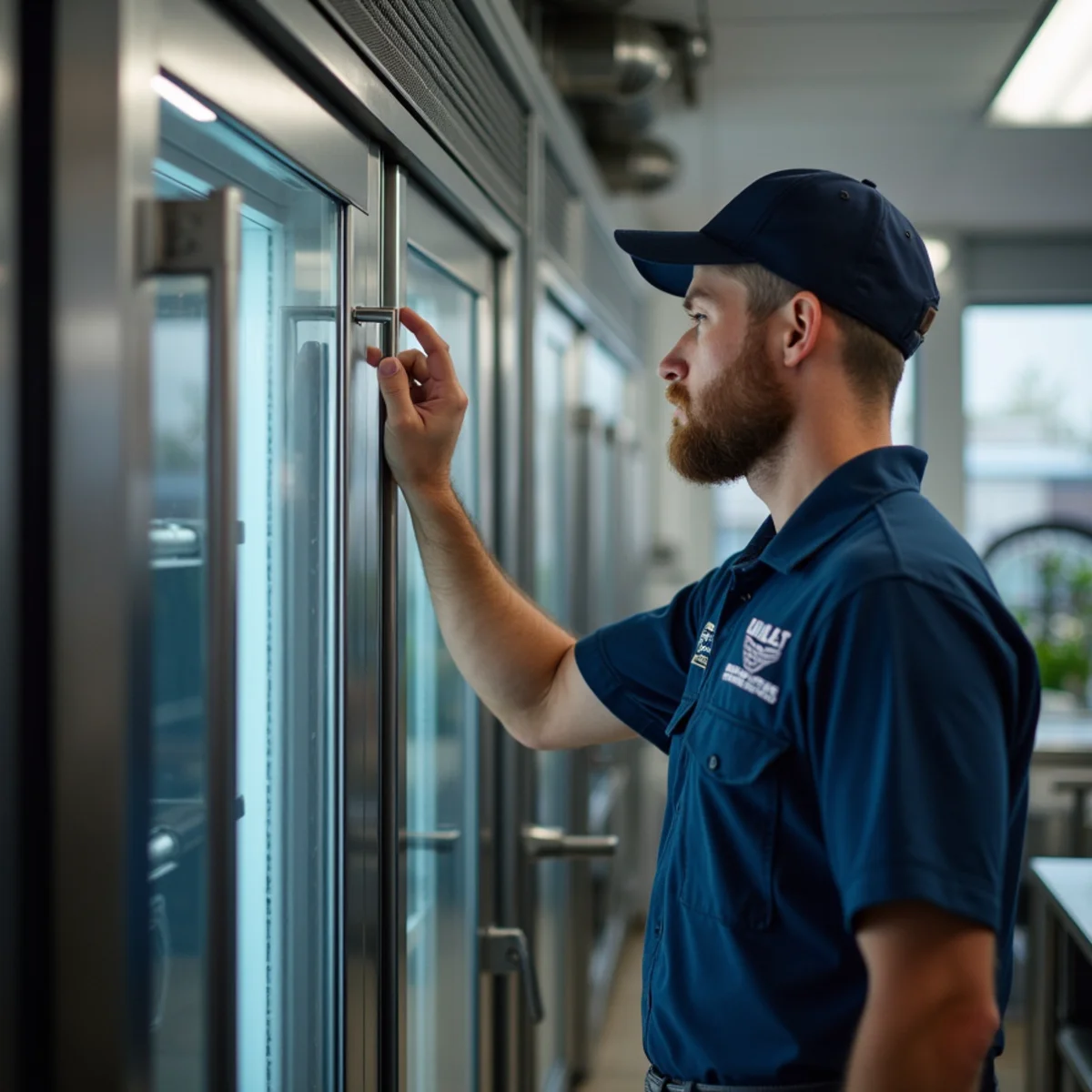
A walk-in cooler or freezer failure is a race against spoilage. Because the walk-in runs continuously and gets opened all day, its refrigeration system works constantly, and a small unaddressed problem can cascade into a full failure fast. The most common issues are preventable with routine attention.
- Dirty condenser coils that make the system overwork and lose capacity
- Iced-up evaporator coils from defrost failures, blocking airflow
- Failing door gaskets and hinges that let cold escape and humidity in
- Clogged drain lines that ice up or back up inside the box
- Low refrigerant from a slow leak, gradually losing cooling capacity
Watch the temperature logs
A walk-in that used to hold 36 degrees easily but now drifts to 40 on hot afternoons is warning you. Rising temperatures or longer recovery times after the door opens are early signs of trouble. Catching that trend saves the whole box of inventory.
Why humidity complicates refrigeration
Our humidity is hard on refrigeration. Every time the walk-in door opens, humid Louisiana air rushes in, and that moisture condenses and freezes on the evaporator coil. That is why defrost systems and door discipline matter so much here. Ice buildup from humidity is a leading cause of walk-in performance problems in the Capital Region, and it is manageable with proper maintenance and functioning defrost controls.
A maintenance rhythm for food service
Reliable restaurant cooling comes from a routine, not from waiting for failures. Clean condenser coils on the walk-in and reach-ins on a regular schedule, check door gaskets and drains, and have a technician verify refrigerant charge and defrost operation periodically. Pair that with maintenance on the dining-room AC before the season peaks, and you head off the failures that happen at the worst possible moment.
Emergency response matters most here
When a walk-in does go down, speed is everything, because every hour is inventory at risk. A local contractor who can respond fast and who knows food-service refrigeration is worth having on speed dial before you need them. Melvin has served Capital Region businesses since 2020 and understands what is at stake when a restaurant's cooling fails.
Defrost strategy, superheat, and the link to your dining room
Walk-in refrigeration runs on the same cycle as an air conditioner but under harder conditions, and its defrost strategy is what keeps it alive in our humidity. Coolers holding above freezing often use an off-cycle defrost, while freezers need electric or hot-gas defrost on a timer or temperature control to shed the frost that our humid air builds on the evaporator every time the door opens. When a defrost control drifts or fails, ice reclaims the coil, airflow drops, and the box slowly loses capacity, which is why a walk-in that ices up repeatedly needs its defrost cycle checked, not just a scrape. A technician also reads superheat at the TXV to confirm the coil is fed correctly, since a starved coil struggles to pull temperature down during a Prairieville lunch rush.
The dining room and the kitchen are more connected than they look. A commercial kitchen hood exhausts a large volume of air, and if the makeup air is not balanced to replace it, the whole restaurant goes negative and pulls hot, humid outdoor air through the front door, undercutting the dining-room AC and loading the refrigeration with extra moisture. Getting that exhaust-and-makeup-air balance right is often the missing piece when a Gonzales dining room never quite feels comfortable during service. Alongside it, disciplined temperature logging on every cooler and freezer turns a slow failure into an early warning instead of a morning surprise.
Your temperature log is a diagnostic tool
Health-department logs are not just paperwork. A cooler creeping from 36 to 40 degrees over a week is telling you a coil, gasket, or defrost problem is developing. Reading that trend saves the inventory and the inspection.
A food-service cooling maintenance calendar
Reliable restaurant cooling is a rhythm, not a rescue. This calendar keeps both the comfort and the refrigeration side ahead of failure.
- Daily: log walk-in and reach-in temperatures and watch for upward drift
- Weekly: wipe door gaskets, confirm doors seal, and clear the floor drains
- Monthly: clean condenser coils on walk-ins and reach-ins so they can shed heat
- Quarterly: have a technician check superheat, defrost operation, and refrigerant charge
- Before summer: service the dining-room AC and verify hood makeup-air balance
- Keep a local refrigeration contractor on speed dial before an emergency hits
Redundancy and response time are the two levers that most protect a food-service operation, and both are worth thinking through before a failure. A single walk-in holding all of your perishable inventory is a single point of failure, so knowing your backup plan, whether that is a second cooler, access to refrigerated storage nearby, or a relationship with a contractor who can respond fast, is part of running the business responsibly. On the comfort side, a dining room that loses cooling on a Saturday night empties tables just as surely as a bad review, so the AC deserves the same proactive attention as the refrigeration. In Prairieville and Gonzales, the restaurants that ride out our brutal summers are the ones that treat both kinds of cooling as core infrastructure rather than background utilities, servicing them on a schedule and keeping a trusted local number on hand. When cooling fails in a restaurant, the clock is always running against your inventory and your revenue, so the preparation you do in the calm weeks is what determines how much a failure actually costs when it comes.
Walk-in warning signs and what they mean
A walk-in rarely fails without warning; it drifts before it dies, and the temperature log is where that drift shows up first. Reading these early signs correctly is the difference between a scheduled repair and a morning spent throwing out inventory. The table below connects the common warning signs to their likely cause for a Prairieville or Gonzales kitchen.
| Warning sign | Likely cause | Action |
|---|---|---|
| Box drifts warmer on hot afternoons | Dirty condenser coil or low charge | Clean coil, have charge checked |
| Long recovery after the door opens | Failing gasket or weak refrigeration | Check seals, call for service |
| Ice building on the evaporator | Defrost fault or humid-air infiltration | Check defrost cycle and door discipline |
| System runs constantly | Low charge, dirty coil, or door leak | Diagnose before capacity is lost |
| Water pooling in the box | Clogged or iced drain line | Clear the drain, check heat tape |
The single habit that ties this together is disciplined temperature logging on every cooler and freezer, because a box creeping from 36 to 40 degrees over a week is telling you a coil, gasket, or defrost problem is developing. Those health-department logs are not just paperwork; read as a trend, they turn a slow failure into an early warning instead of a Saturday-morning surprise.
Redundancy and response time protect the operation
Two levers most protect a food-service operation when cooling fails, and both are worth settling before an emergency. The first is redundancy: a single walk-in holding all of your perishable inventory is a single point of failure, so knowing your backup plan matters, whether that is a second cooler, access to refrigerated storage nearby, or a relationship with a contractor who can respond fast. Deciding this in advance is part of running a Prairieville or Gonzales kitchen responsibly rather than hoping the box never quits.
The second lever is response time, and it favors a local contractor who already knows your equipment. When a walk-in goes down, the clock runs against your inventory and your revenue by the hour, so a familiar tech who can get there quickly is worth having on speed dial before you need them. The restaurants that ride out our brutal summers are the ones that treat both the comfort cooling and the refrigeration as core infrastructure, servicing them on a schedule and keeping a trusted local number on hand for the day something fails.
Keep your kitchen and dining room cool
Do not let a cooling failure cost you a night's revenue or a walk-in full of product. For restaurant AC, walk-in cooler care, and fast service in Prairieville, Gonzales, and across Baton Rouge, call Geaux 72 at (831) 461-3437.
Frequently Asked Questions
Condenser coils should be cleaned on a regular schedule, and a technician should check refrigerant charge, defrost operation, drains, and door seals periodically. Heavy daily use in our humidity makes routine attention essential.
Humid Louisiana air enters every time the door opens, and that moisture freezes on the evaporator coil, especially if defrost controls are failing or door gaskets leak. Proper defrost function and door discipline prevent it.
Rising box temperatures, longer recovery after the door opens, ice buildup, or the system running constantly. Watching your temperature logs catches these trends early, before you lose the whole inventory.
Yes. When a walk-in goes down, every hour risks inventory, so fast local response matters. We serve food-service businesses across the Capital Region. Call (831) 461-3437.
A cooler for fresh food typically holds around 36 to 38 degrees, while a walk-in freezer runs near zero. What matters most is the trend: a cooler that used to hold 36 easily but now drifts to 40 on hot afternoons is warning you of a developing coil, gasket, or defrost problem. Call (831) 461-3437 before you lose inventory.
Related services & areas
Service areas