Problem-solving
Why Your AC Freezes Up in Humid Louisiana Summers
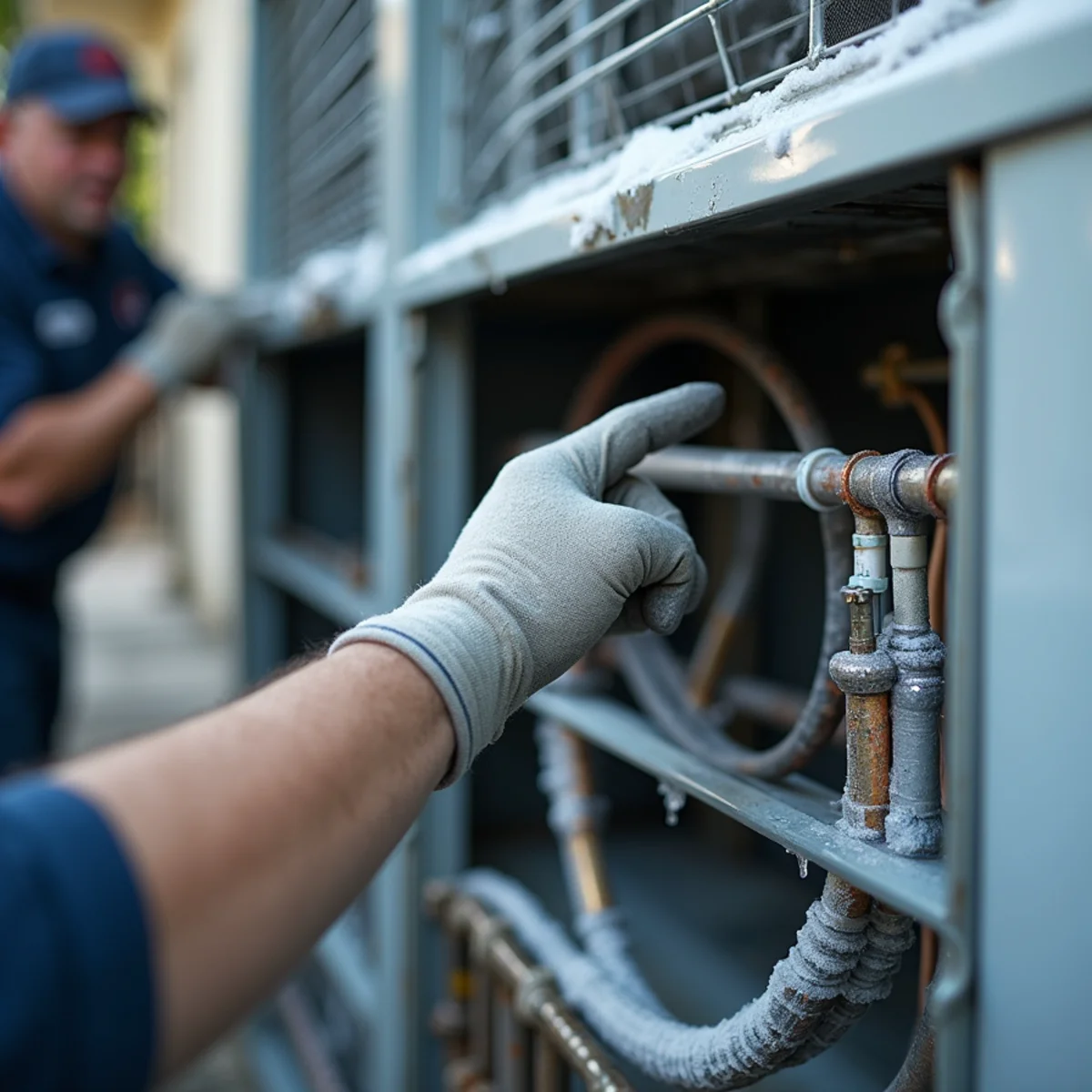
It feels like a contradiction: the outdoor temperature is 95 degrees, but your air conditioner is wrapped in ice and blowing warm air. Frozen coils are among the most frequent calls we run in Port Allen and Gonzales every summer, and the humidity that defines our climate is a big part of why. Understanding the cause helps you catch it before it damages the compressor.
The core problem is always the same at its root: the evaporator coil is getting colder than it should, and moisture in the air condenses on it and freezes. Two families of causes drive that, and they call for very different fixes.
How freezing actually happens
Your evaporator coil is cold by design; refrigerant absorbs heat there and the surface runs around 40 degrees in normal operation. In Louisiana's humidity, that coil is constantly pulling water out of the air, which is good, that is dehumidification. But if the coil drops below freezing, that condensation turns to ice instead of dripping to the drain. Once ice starts, it insulates the coil, cooling drops, and the ice grows into the block homeowners find.
Cause one: restricted airflow
This is the most common cause by far. The coil needs a steady stream of warm return air passing over it to stay above freezing. Choke that airflow and the coil gets too cold. Culprits include a clogged filter, closed or blocked supply registers, a dirty blower wheel, or a coil caked with dust and biofilm, which thrives in our humid ducts.
- A filter that has not been changed in months
- Furniture, rugs, or closed vents starving return airflow
- A dirty evaporator coil that cannot transfer heat
- A failing blower motor moving too little air
First response to ice
Turn the cooling off and the fan on to thaw the coil, which can take a few hours. Never chip at the ice. Then have the underlying cause diagnosed, because a coil that froze once will freeze again until the root problem is fixed.
Cause two: low refrigerant
When refrigerant charge is low, usually from a leak, the pressure in the coil drops, and lower pressure means a colder coil that freezes readily. Adding refrigerant without finding the leak just delays the next failure and vents refrigerant into the atmosphere, which is both wasteful and illegal to ignore. Proper refrigerant leak detection locates the source so it can be sealed before recharging.
Why humidity makes it worse here
In a dry climate, a marginally cold coil might not freeze because there is little moisture to condense. In Baton Rouge, with humidity routinely in the muggy range, there is always plenty of water in the air to freeze onto a too-cold coil. That is why the same airflow or charge problem that a desert home might shrug off will ice up fast in the Capital Region.
Preventing repeat freeze-ups
- Change filters on schedule, more often during peak cooling.
- Keep supply and return vents open and unobstructed.
- Have the coil and blower cleaned during annual maintenance.
- Address any refrigerant leak at the source, not with a top-off.
The physics of a frozen coil, and why our dew point makes it worse
An evaporator coil freezes when its surface temperature falls below 32 degrees while moisture is present to condense and freeze on it. In Baton Rouge, our summer dew points routinely sit in the low-to-mid 70s, which means the air is loaded with water and there is always plenty of moisture ready to condense the instant a coil runs too cold. A home in a dry climate might run a marginally cold coil for years without a problem. Here, that same marginal condition ices over within a single humid afternoon, which is why frozen coils are one of the most frequent summer calls we run in Port Allen and Gonzales.
How the system meters refrigerant into that coil matters too. Systems with a fixed orifice, or piston, are less forgiving of low airflow and low charge than systems with a thermostatic expansion valve, or TXV, which modulates flow to hold a steadier superheat. A technician measures superheat and subcooling to read what is actually happening at the coil: high superheat with a starved, over-cold coil points toward low charge or a restriction, while a normal charge with poor airflow points back at the filter, blower, or duct side. Those two measurements separate the two families of causes in minutes.
A metering upgrade worth asking about
If your system freezes repeatedly and carries a fixed-orifice metering device, ask whether a TXV upgrade suits your equipment. It will not fix a leak or a dirty filter, but it makes a system far more tolerant of the swings our climate throws at it.
Diagnosing airflow versus charge, step by step
Because the two root causes need opposite fixes, the diagnosis follows a deliberate order after the ice has fully thawed.
- Thaw the coil completely with cooling off and the fan on before any readings are taken
- Inspect and replace the filter, then confirm every supply and return vent is open
- Measure static pressure to catch a hidden duct or blower restriction
- Read superheat and subcooling to judge whether the charge is correct
- Inspect the coil and blower wheel for the dust and biofilm our humid ducts breed
- Pressure-test for a leak if the charge is low, rather than simply topping it off
There is a seasonal wrinkle worth knowing about too. Early and late in the cooling season, when Baton Rouge nights drop into the 60s but the afternoons still call for air conditioning, running the AC in cool outdoor temperatures can push a marginal system into freezing, because the lower outdoor temperature drops the head pressure and, with it, the coil temperature. If your system only ices up on those cooler evenings, that low-ambient behavior is a clue in itself, and it is one reason we sometimes recommend a low-ambient control on systems asked to cool in mild weather. It also explains why a coil that behaves fine in the dead heat of August can start freezing in October. Whatever the trigger, the underlying rule holds: a coil freezes because it is running too cold for the moisture in the air, and the fix is to correct the airflow or the charge, never to keep thawing and restarting a system that will simply ice over again by the next afternoon in Port Allen or Gonzales.
Reading the clues: airflow problem or charge problem
Since the two root causes need opposite fixes, the clues you can observe before a technician arrives often point one way or the other. None of these is a diagnosis on its own, but together they help you describe the problem accurately and understand what the tech will confirm with instruments in Port Allen or Gonzales.
| What you observe | Leans toward | What confirms it |
|---|---|---|
| Filthy filter or closed vents | Airflow restriction | High static pressure reading |
| Dirty coil or a weak blower | Airflow restriction | Low airflow, normal charge |
| Hissing or oily residue at fittings | Low refrigerant from a leak | Leak search, low subcooling |
| Freezes only on cool evenings | Low-ambient operation | Low head pressure at the unit |
| Ice returns fast after every thaw | Unresolved charge or airflow fault | Superheat and static pressure |
The reason it matters to get this right is the compressor. Running a system iced over slugs liquid refrigerant back toward the compressor and starves it of proper cooling, and that is how a cheap airflow or leak fix turns into a compressor replacement when it is ignored across a Louisiana summer. Thawing and restarting without correcting the cause simply schedules the next freeze.
What to do the moment you spot ice
Catching a freeze-up early and responding correctly can save both the coil and the compressor, so it is worth knowing the exact sequence. The instant you notice ice on the coil, the copper suction line, or warm air from the vents, switch the thermostat from COOL to OFF but set the fan to ON. Running the blower with the cooling off pushes room-temperature air across the coil and melts the ice far faster than simply shutting everything down, and it does so without the risk of forcing a compressor to run buried in ice. Depending on how thick the block is, a full thaw can take a few hours, so resist the urge to switch cooling back on early.
While it thaws, do the free diagnostics you safely can in Port Allen or Gonzales: pull and inspect the filter, confirm every supply and return vent is open and unblocked, and look for obvious dirt on the coil if it is accessible. If the filter was filthy or vents were closed, you may have found an airflow cause you can correct yourself. If the filter is clean and airflow looks fine, the odds shift toward a refrigerant or metering problem, which is a technician's job. Either way, never chip at the ice with a knife or screwdriver, because puncturing the thin aluminum coil turns a freeze-up into a refrigerant leak.
Stop the ice for good
A frozen coil is a symptom, not the disease, and running the system iced up strains the compressor toward an expensive failure. If your AC keeps freezing at your home in Port Allen, Gonzales, or anywhere around Baton Rouge, call Geaux 72 at (831) 461-3437 and we will find the real cause and fix it.
Frequently Asked Questions
Ice forms when the evaporator coil drops below freezing and humidity condenses and freezes on it. Restricted airflow or low refrigerant makes the coil too cold, and Louisiana's humidity supplies plenty of moisture to freeze.
Turn cooling off and the fan on to thaw the ice, which can take a few hours. Do not chip at it. Then have the airflow or refrigerant cause diagnosed so it does not refreeze.
Yes. A clogged filter starves the coil of the warm return air it needs to stay above freezing, so the coil ices over. Restricted airflow is the single most common cause of frozen coils we see.
Low refrigerant usually means a leak. Topping off without finding and sealing the leak wastes refrigerant, is environmentally harmful, and only delays the next freeze-up. Proper leak detection is the real fix. Call (831) 461-3437.
It can. Running an iced-over system can slug liquid refrigerant back to the compressor and make it run hot, which over a summer can lead to an expensive failure. Shut it off, let it thaw, and have the cause fixed rather than restarting it. Call (831) 461-3437.
Related services & areas
Services
Service areas